
In today’s hyper-connected digital world, your online presence is your first impression. Whether you’re a freelancer trying to win clients, an entrepreneur launching a startup, a student entering the job market, or a professional looking to advance your career — personal branding on social media is no longer optional. It’s essential.
This complete guide by branding.net.in will walk you through everything you need to know about how to use social media for personal branding — from defining who you are to creating content that builds authority and trust. Let’s dive in.
1. Introduction to Personal Branding
Personal branding is the practice of deliberately shaping how the world sees you. It’s the art of packaging your skills, values, experiences, and personality into a consistent and recognizable identity that sets you apart from everyone else.
Think of it this way: when people Google your name or find your social media profile, what do they see? Is it a clear, professional, and compelling story? Or is it a scattered mix of random posts and outdated information? Your personal brand is what people say about you when you’re not in the room — and social media is where that conversation happens most often.
The good news is that building a powerful personal brand is not reserved for celebrities or industry giants. With the right strategy, anyone can build a compelling online identity that opens doors to new opportunities.
2. What is Personal Branding on Social Media?
Social media personal branding refers to the strategic use of social media platforms to communicate your unique identity, expertise, and value to your target audience. It involves consistently sharing content, engaging with others, and positioning yourself as a credible voice in your niche.
It is not just about posting selfies or sharing motivational quotes. True personal branding on social media means:
- Telling your story in an authentic and compelling way
- Sharing knowledge and insights that genuinely help your audience
- Building real relationships with your followers and peers
- Being consistent in your message, tone, and visual identity
- Positioning yourself as a go-to expert in your field
In essence, it is about turning your name into a trusted brand that people recognize, remember, and recommend.
3. Why Social Media is Important for Personal Branding
Social media has fundamentally changed the way people discover, connect with, and evaluate others. Here’s why it’s critical for building your personal brand in 2026:
- Massive Reach: Platforms like Instagram, LinkedIn, and YouTube have billions of active users. Social media gives you the ability to reach people across the globe without a massive advertising budget.
- 24/7 Visibility: Your profile works for you around the clock. A well-optimized profile and strong content continues to attract attention even while you sleep.
- Direct Access to Your Audience: Unlike traditional media, social media removes the middleman. You can speak directly to your audience, respond to their questions, and build genuine relationships.
- Search and Discovery: People search for professionals and experts on social media just as much as they do on Google. A strong social presence ensures you’re found.
- Social Proof: Followers, engagement, testimonials, and consistent content all act as powerful signals of credibility and authority.
- Career and Business Opportunities: Recruiters, clients, investors, and collaborators actively search social media to find and vet talent. A strong personal brand can be the difference between being discovered and being overlooked.
4. Benefits of Building a Personal Brand Online
Investing in your personal brand online delivers compounding returns over time. Here are the key benefits:
- Increased Credibility and Trust: A consistent, value-driven presence builds authority in your niche and earns the trust of your audience.
- Better Career Opportunities: Professionals with strong personal brands are more likely to be headhunted, promoted, or invited to speak at events.
- Higher Earning Potential: Brands, clients, and employers pay a premium for experts with proven personal brands.
- Growing Your Network: A visible online presence attracts like-minded professionals, collaborators, and mentors into your circle.
- Business Growth: For entrepreneurs and freelancers, a personal brand is one of the most powerful marketing tools available — often more effective than traditional advertising.
- Creative Freedom: Building your own platform means you control your message, your narrative, and your audience.
- Long-Term Asset: Unlike a job title that can disappear overnight, your personal brand is an asset that you own forever.
5. Best Social Media Platforms for Personal Branding
Not all social media platforms are created equal when it comes to personal branding. The best platform for you depends on your niche, audience, and content style. Here’s a breakdown of the top platforms in 2026:
LinkedIn is the undisputed king of professional personal branding. With over 1 billion members, it’s the go-to platform for professionals, executives, entrepreneurs, and job seekers. LinkedIn is ideal for sharing thought leadership articles, professional achievements, career updates, and industry insights. If you’re building a B2B brand or looking to advance your career, LinkedIn should be your primary platform.
Twitter / X
Twitter/X is the platform for real-time conversations, hot takes, and building a following around your opinions and expertise. It’s especially powerful for writers, journalists, tech professionals, marketers, and public figures. Short-form, high-frequency content works best here. Engaging in trending conversations and threads can rapidly grow your visibility.
Instagram is a visually-driven platform that’s perfect for creatives, lifestyle brands, coaches, fitness professionals, and anyone whose brand has a strong visual component. With Reels, Stories, and Carousels, Instagram offers diverse formats to showcase your personality and expertise. It’s especially effective for reaching younger demographics.
YouTube
YouTube remains the world’s second-largest search engine and the dominant platform for long-form video content. If you can create educational tutorials, vlogs, interviews, or documentary-style content, YouTube offers unparalleled opportunities to build deep authority and a highly engaged audience. YouTube content also has excellent SEO value and long shelf life.
Facebook still commands a massive user base, particularly among the 30–55 age demographic. Facebook Groups are especially powerful for building communities around your niche. For personal branding, a well-maintained Facebook Page or active group can be an effective tool for building loyalty and driving engagement.
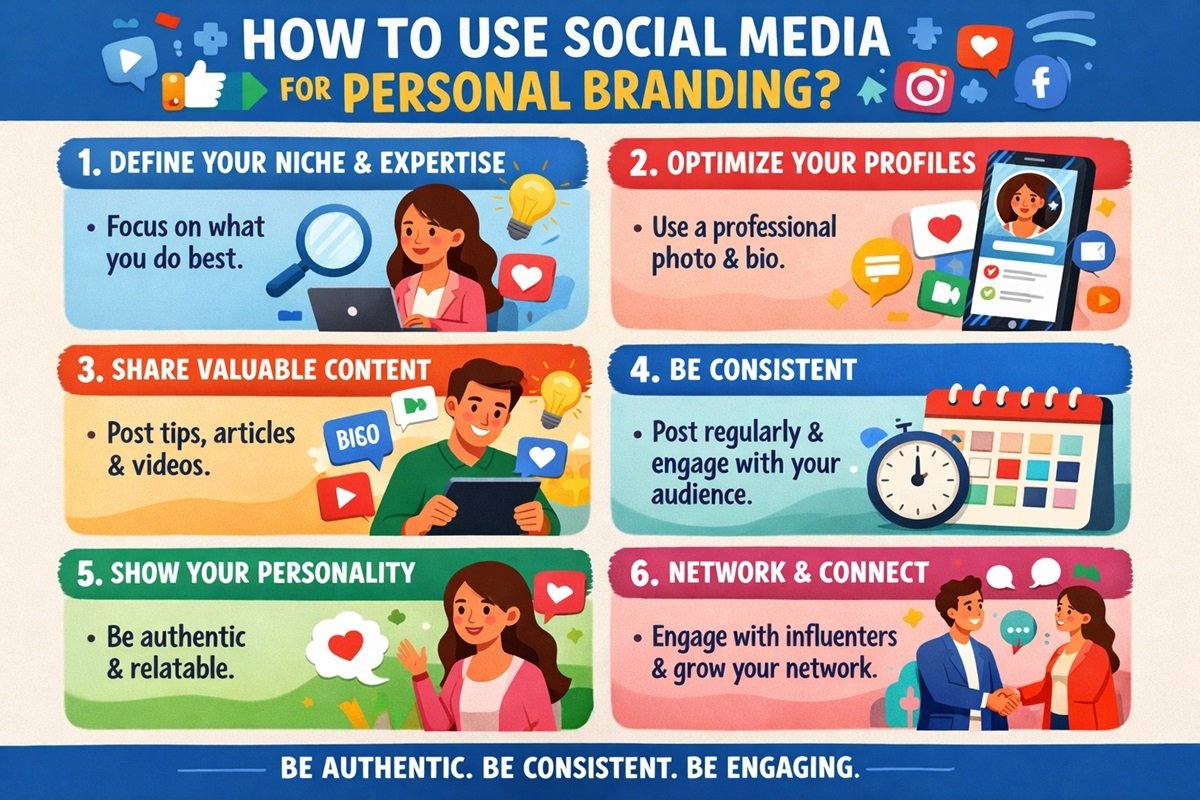
6. Step-by-Step Guide to Build a Personal Brand on Social Media
Now let’s get into the practical steps. Here is a proven, actionable social media branding strategy that works for beginners and experienced professionals alike.
Step 1: Define Your Personal Brand
Before you post a single piece of content, you need to get crystal clear on who you are and what you stand for. Ask yourself:
- What are my core skills, passions, and values?
- What unique perspective or experience do I bring?
- What do I want to be known for?
- What is my brand personality — professional, bold, warm, humorous, inspirational?
Write a clear personal brand statement that summarizes who you are, who you serve, and the value you provide. This statement will guide every content decision you make.
Step 2: Identify Your Target Audience
Trying to appeal to everyone means appealing to no one. Define your ideal audience by considering:
- Age, profession, location, and interests
- What problems they face and what goals they have
- What kind of content they consume and which platforms they use
When you know exactly who you’re speaking to, your content becomes far more relevant, relatable, and effective.
Step 3: Choose the Right Platforms
Based on your audience research, select one or two primary platforms to focus on first. It’s better to dominate one platform than to be mediocre across five. As you grow, you can repurpose content and expand to other platforms.
Step 4: Optimize Your Profile
Your social media profile is your digital business card. Make every element count:
- Profile Photo: Use a high-quality, professional headshot with good lighting and a clean background.
- Cover Image/Banner: Use this space to reinforce your brand message or showcase your expertise.
- Bio/Headline: Clearly state what you do and the value you provide. Include relevant keywords naturally.
- Link in Bio: Direct visitors to your website, portfolio, newsletter, or a lead magnet.
- Username/Handle: Use your real name consistently across all platforms for easy discovery.
Step 5: Create Valuable Content
Content is the engine of your personal brand. The most successful personal brands consistently create content that educates, entertains, or inspires. Focus on:
- Sharing your expertise through tutorials, tips, and how-to guides
- Telling personal stories that illustrate your journey and values
- Sharing your opinion on industry trends and news
- Showcasing results, case studies, and testimonials
- Creating content that solves your audience’s real problems
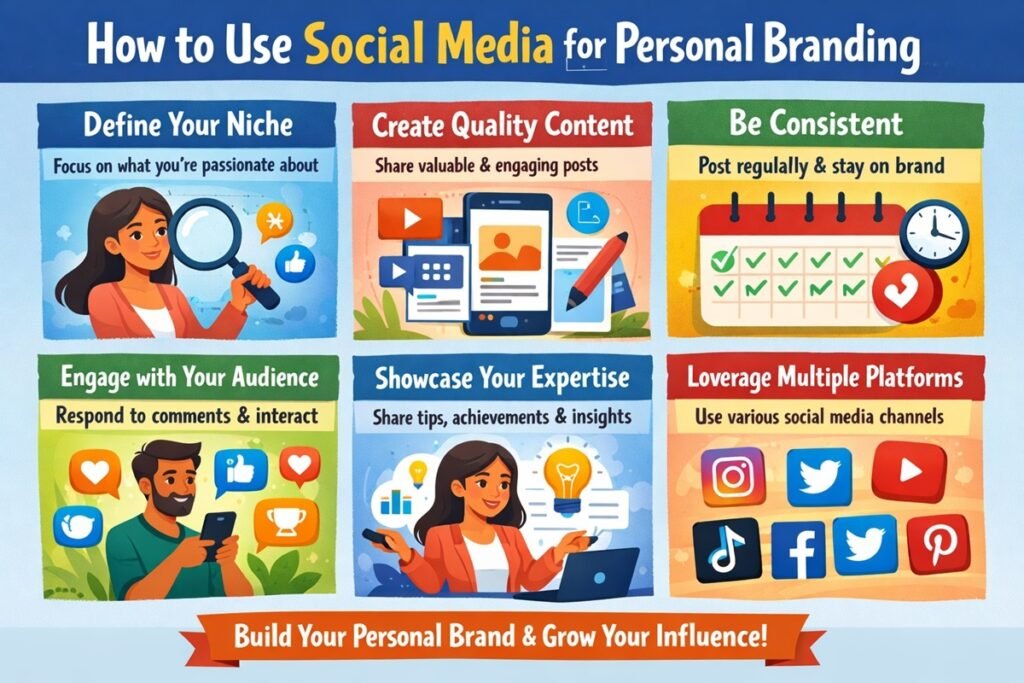
Step 6: Maintain Consistency
Consistency is the single most important factor in building a personal brand. This means:
- Posting on a regular schedule (daily, 3x per week, weekly — whatever is sustainable for you)
- Maintaining a consistent visual style (colors, fonts, photography style)
- Using a consistent tone of voice across all content
- Staying on-topic and on-brand in every post
Use a content calendar to plan and schedule your posts in advance, so you never run out of ideas or miss a posting day.
Step 7: Engage with Your Audience
Building a personal brand is a two-way conversation. Don’t just broadcast — connect. Respond to every comment, answer DMs, ask questions, run polls, and participate in community discussions. The more genuine engagement you create, the more loyal your audience becomes. Algorithms also reward engagement, giving your content more organic reach.
Step 8: Build Authority in Your Niche
To be seen as an expert, you need to consistently demonstrate expertise. Strategies to build authority include:
- Guest posting on reputable blogs and websites
- Appearing on podcasts as a guest speaker
- Writing long-form articles and thought leadership pieces
- Collaborating with other respected creators in your niche
- Speaking at virtual or in-person events
- Publishing a newsletter or starting a podcast of your own
7. Types of Content That Build Personal Branding
Not sure what to post? Here are the most effective content types for building a strong personal brand on social media:
- Educational Posts: Tips, how-tos, tutorials, explainers — content that teaches your audience something valuable
- Personal Stories: Behind-the-scenes glimpses, lessons learned, failures, and wins that humanize your brand
- Opinion/Thought Leadership: Your unique take on industry trends, news, or debates
- Case Studies and Results: Real examples of your work and the outcomes you’ve achieved
- Curated Content: Sharing and adding commentary on valuable third-party content relevant to your niche
- Video Content: Reels, YouTube videos, live streams — video builds trust and connection faster than any other format
- Infographics and Carousels: Visually appealing, highly shareable, and great for educating your audience
- Testimonials and Social Proof: Screenshots, quotes, and reviews from people you’ve helped
- Q&A and Polls: Interactive content that boosts engagement and gives you insight into your audience’s needs
8. Personal Branding Content Strategy
A winning social media branding strategy isn’t random — it’s built on a clear framework. Here’s how to structure yours:
- Set Clear Goals: Define what success looks like — followers, leads, speaking invitations, job offers, or sales.
- Choose Your Content Pillars: Select 3–5 core topics that align with your brand and audience. Every piece of content should fall under one of these pillars.
- Build a Content Calendar: Plan your content at least two weeks in advance. Mix content types and formats to keep your feed fresh and engaging.
- Repurpose Content Across Platforms: A single idea can become a LinkedIn post, an Instagram carousel, a Twitter thread, a YouTube video, and a newsletter. Work smarter, not harder.
- Track Your Metrics: Monitor engagement rate, reach, follower growth, and click-through rates regularly. Use data to refine your strategy over time.
- Test and Iterate: Experiment with different content formats, posting times, and topics. Double down on what works and drop what doesn’t.
9. Common Mistakes to Avoid
Even well-intentioned personal branding efforts can go off track. Avoid these common pitfalls:
- Being Inconsistent: Posting sporadically destroys momentum. Your audience needs to know when to expect you.
- Trying to Please Everyone: A niche-focused brand is far more powerful than a generic one. Pick your lane and own it.
- Only Talking About Yourself: Personal branding is about serving your audience, not promoting yourself 24/7. Lead with value.
- Ignoring Engagement: Not responding to comments and messages signals that you’re not invested in your community.
- Copying Others: Borrowing ideas is fine, but copying someone else’s content or style undermines your authenticity.
- Neglecting Profile Optimization: An incomplete or outdated profile instantly reduces your credibility.
- Chasing Vanity Metrics: Follower count means little without engagement. Focus on building a loyal, engaged community, not just a large one.
- Giving Up Too Soon: Personal branding takes time. Most people give up before momentum builds. Stay consistent for at least 6–12 months before judging your results.
10. Best Tools for Managing Social Media Branding
As per DigitalExpressHub, The right tools can dramatically streamline your workflow and improve the quality of your content:
- Canva: Design stunning graphics, carousels, and visual content with ease — even without design experience.
- Buffer / Hootsuite / Later: Schedule and manage your social media posts across multiple platforms from a single dashboard.
- ChatGPT / Claude: Use AI tools for content ideation, caption writing, and brainstorming post ideas.
- Notion / Trello: Organize your content calendar and brand strategy in one place.
- Loom / CapCut: Create and edit professional-looking video content quickly and affordably.
- Google Analytics / Native Platform Insights: Track what’s working and make data-driven decisions.
- Linktree / Beacons: Create a simple landing page to house all your important links in your bio.
- Grammarly: Ensure your captions, articles, and posts are polished and error-free.
11. Real Examples of Successful Personal Branding
Looking at those who have done it successfully can be incredibly instructive:
- Gary Vaynerchuk (Gary Vee): Built a massive personal brand around entrepreneurship and hustle culture through relentless content across YouTube, Instagram, LinkedIn, and podcasts. His raw, unfiltered style differentiated him from every other business influencer.
- Neil Patel: Established himself as one of the world’s top digital marketing authorities through a combination of educational blog content, YouTube videos, podcasts, and free tools. His brand is built entirely around giving away value.
- Brené Brown: A researcher turned cultural phenomenon who built a global brand through authentic storytelling, a viral TED Talk, and consistent book releases. Her brand is rooted in vulnerability and human connection.
- Sahil Bloom: A former Wall Street professional who grew a massive following on Twitter/X by sharing frameworks and mental models around finance, business, and personal growth. A great example of a modern-era social media personal brand built from scratch.
What do all these people have in common? They identified a clear niche, committed to delivering genuine value, remained consistent over years, and built authentic communities around their work.
12. Tips to Grow Faster on Social Media
Want to accelerate the growth of your personal brand online? Apply these proven tactics:
- Post at Peak Times: Use platform analytics to identify when your audience is most active and schedule your posts accordingly.
- Use Trending Hashtags and Keywords: Research what your audience is searching for and incorporate those terms naturally into your content.
- Collaborate and Cross-Promote: Partner with creators in complementary niches for shoutouts, interviews, and co-created content.
- Engage Before and After Posting: Spend 15–30 minutes engaging with relevant accounts before and after you post. This signals activity to the algorithm and attracts attention to your profile.
- Leverage Video: Short-form video (Reels, TikTok, YouTube Shorts) receives significantly more organic reach than static posts on most platforms right now.
- Write Killer Headlines and Hooks: The first line of your post determines whether people stop scrolling or keep going. Invest time in crafting compelling, curiosity-driven openers.
- Go Live Regularly: Live video creates real-time connection with your audience and is typically rewarded with greater algorithmic reach.
- Build an Email List: Social media algorithms change constantly. An email list is an audience you own. Convert your social followers into email subscribers to protect your brand’s future.
13. Future of Personal Branding in the AI Era
The landscape of social media personal branding is evolving rapidly, driven by artificial intelligence, shifting algorithms, and changing audience expectations. Here’s what to prepare for:
- AI-Assisted Content Creation: Tools like Claude, ChatGPT, and Gemini are making content creation faster and more accessible. Savvy personal brand builders are using AI to scale their content output while maintaining authenticity.
- Hyper-Personalization: AI-powered platforms are getting better at delivering content to exactly the right people. This means niche, specific content will outperform broad, generic content even more in the coming years.
- Authenticity Over Perfection: As AI-generated content floods feeds, raw, genuine, human-made content will become even more valuable and differentiated. Your unique voice and lived experience are your biggest competitive advantages.
- Video and Audio Dominate: Short-form video and podcasting will continue to grow as the dominant content formats. Brands that invest in these mediums now will have a significant head start.
- Decentralized Platforms: New, creator-first platforms continue to emerge. Personal brand builders who own their audience (via email lists, newsletters, and owned communities) will be better insulated from platform volatility.
- AI Avatars and Digital Clones: Emerging technologies are enabling creators to scale their presence through AI-generated avatars. While still nascent, this will reshape how personal brands operate at scale.
The future belongs to those who combine the power of AI tools with deeply human storytelling, authenticity, and genuine expertise.
14. Conclusion
Building a powerful personal brand on social media is one of the most valuable investments you can make in yourself and your future. It won’t happen overnight, but with a clear strategy, consistent effort, and genuine commitment to serving your audience, the results can be truly transformative.
Here’s a quick recap of what we covered:
- Define your brand identity and target audience clearly
- Choose the right platforms based on where your audience lives
- Optimize your profile to make a strong first impression
- Create consistent, valuable content across multiple formats
- Engage authentically with your community
- Build authority through collaboration, thought leadership, and social proof
- Use the right tools to streamline your workflow
- Stay ahead of trends, especially in AI and video content
Your personal brand is your story — and only you can tell it. Start today, stay consistent, and watch as your online presence transforms into one of your most powerful career and business assets.
Stay tuned to branding.net.in for more insights on SEO, digital marketing, and technology that help you grow in the digital age.
Frequently Asked Questions (FAQs)
1. What is personal branding on social media?
Personal branding on social media is the strategic process of using platforms like LinkedIn, Instagram, YouTube, and Twitter/X to communicate your unique identity, skills, and expertise to your target audience. It involves consistently sharing valuable content, engaging with your community, and positioning yourself as a credible and recognizable voice in your niche.
2. Which social media platform is best for personal branding?
LinkedIn is considered the best platform for professional personal branding, especially for entrepreneurs, job seekers, and B2B professionals. However, the best platform ultimately depends on your niche and audience. Instagram works great for creatives and lifestyle brands, YouTube for educators and long-form content creators, and Twitter/X for thought leaders and industry commentators.
3. How long does it take to build a personal brand on social media?
Building a strong personal brand on social media typically takes 6 to 12 months of consistent effort before you start seeing meaningful results. The timeline depends on how often you post, the quality of your content, how actively you engage with your audience, and how clearly defined your niche is. Consistency is the single most important factor.
4. Do I need to be on every social media platform to build a personal brand?
No. It is far more effective to dominate one or two platforms than to spread yourself thin across many. Start with the platform where your target audience is most active, build a strong presence there first, and then expand to other platforms once you have a consistent content system in place.
5. What type of content should I post to build my personal brand?
The most effective content types for personal branding include educational tips and how-to guides, personal stories and behind-the-scenes posts, opinion pieces and thought leadership content, case studies and results, short-form videos and Reels, and infographics or carousel posts. Focus on content that genuinely helps, educates, or inspires your specific target audience.
6. Can a beginner build a personal brand on social media without a large following?
Absolutely. You do not need a large following to start building a personal brand. Even with a small but engaged and loyal audience, you can attract clients, job opportunities, and collaborations. Focus on delivering consistent value and building real relationships rather than chasing follower counts from day one.
7. How important is consistency for personal branding on social media?
Consistency is arguably the most critical factor in personal branding success. This means posting regularly on a schedule, maintaining a consistent visual style and tone of voice, and staying focused on your niche topics. Inconsistent posting disrupts audience trust, hurts algorithm performance, and slows brand growth significantly.
8. What are the biggest mistakes to avoid when building a personal brand online?
The most common personal branding mistakes include being inconsistent with posting, trying to appeal to everyone instead of a specific niche, neglecting to engage with your audience, copying other creators instead of developing your own authentic voice, chasing vanity metrics like follower counts, and giving up too early before momentum builds.
9. How does personal branding help in career growth?
A strong personal brand significantly boosts career growth by increasing your visibility to recruiters, clients, and industry leaders. It builds credibility and trust in your field, opens doors to speaking engagements, collaborations, and media opportunities, and positions you as an expert — which can lead to higher earning potential and faster professional advancement.
10. How will AI impact personal branding on social media in the future?
AI is already transforming personal branding by making content creation faster and more accessible through tools like ChatGPT and Claude. In the future, AI will enable hyper-personalized content delivery, AI-assisted audience targeting, and even digital avatars for creators. However, authenticity, lived experience, and a genuine human voice will become even more valuable as AI-generated content becomes more widespread.
Content Disclosure
The article published on branding.net.in is researched, outlined, reviewed, and edited by our human editorial team. AI writing tools were used to assist in drafting and structuring portions of this content. All information, opinions, recommendations, and insights have been verified, fact-checked, and approved by a human expert before publication. We are committed to providing accurate, helpful, and trustworthy content to our readers.